Summary: Decoration is where a tube either looks premium or chips in week three. This guide compares the three printing methods used on cosmetic tubes, explains the surface-treatment step most buyers never hear about, and gives the artwork design rules that prevent registration and barcode failures.

The Decoration Sequence
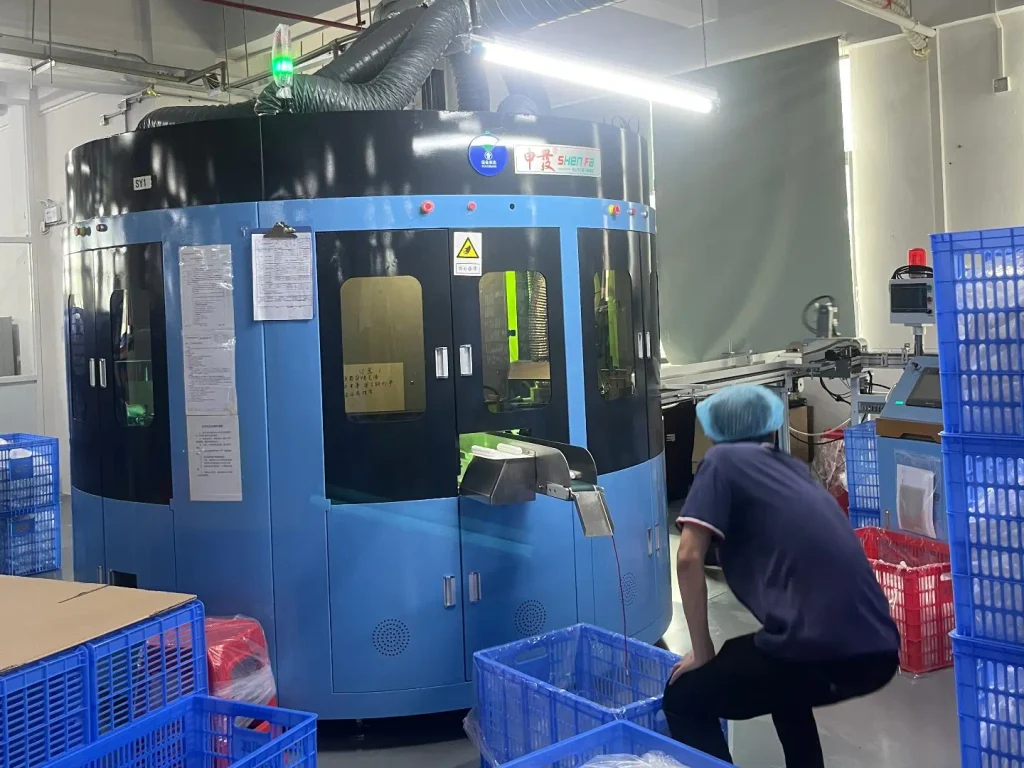
Dust removal → surface pre-treatment → offset printing (UV ink) → varnish/coating (UV or thermal cure) → silkscreen → further post-processing.
- Dust removal: plastic rubbing against metal molds builds static, so tube surfaces attract dust. It must be removed before any ink touches the tube.
- Surface pre-treatment: polyethylene is non-polar — ink simply will not bond to untreated PE. Corona or flame treatment raises surface tension; the acceptance line is ≥ 36 dynes/cm, verified with dyne pens. If a supplier skips this step, the print looks fine for two weeks and then chips. This is the single most important question to ask a decoration shop.
Offset vs Silkscreen vs Hot Stamping
| Method | Max colors | Registration | Strengths | Weaknesses |
| Offset (wet-on-wet, UV ink) | 6 | ±0.3 mm | Best for multi-color and large solid areas; good adhesion; best halftone quality | Lower coverage; batch-to-batch color variation; highlights limited to ≥5% dots — tube halftones are less fine than flat-sheet offset |
| Silkscreen | 6, positional printing possible | ±0.8 mm (varies with diameter) | Thick ink with a 3-D feel; strong coverage even on colored tubes; small color shift | Lower fineness; poor for fine registration work |
| Hot stamping (foil) | — | — | Premium metallic finish; plates in copper, zinc or resin | Prone to plate-filling on small text, wrinkling on large areas, streaking, adhesion and registration drift |
Practical reading: fine gradients and big color fields → offset; thick bold logos on colored tubes → silkscreen; metallic accents → hot stamping. Combination artwork (stamp over offset) needs the design rules below.
Silkscreen printing is also widely used on rigid plastic cosmetic bottles, where surface preparation, ink adhesion, color matching, and print registration require their own quality controls. For a closer look at the process and common quality issues, see our guide to screen printing on plastic cosmetic bottles.
Artwork Design Rules That Prevent Failures
- Reverse-out text on large color blocks must be bolded (bold reversed-out), or it fills in.
- Multi-plate registration artwork demands high design precision and precise film output.
- Hot-stamp/overprint lines should be ≥ 0.8 mm wide — the stamp/plate overlaps the base print by ~0.4 mm to absorb left-right registration drift.
- Barcodes must be vertical and use scanner-approved color pairs. Safe: white or orange or red backgrounds with black/blue/green/dark-brown bars. Unsafe: white bars on gold/red/yellow backgrounds, gold bars on anything. If your brand color fails the pairing table, add a white barcode patch instead of risking unscannable packaging.
Varnish (Coating) Rules Buyers Should Know
- Varnish that is too thick shows a visible joint seam on gloss and looks rough on matte/silver/soft-touch; too thin leaves patchy coverage.
- Silver varnish is a physical mix, not a chemical solution — silver powder accumulates over time.
- Coating is tested for color-fastness, stain resistance and adhesion.
- Coating height tolerance: 2 ± 1.5 mm — and for unsealed tubes, confirm the customer’s sealing method first.
- Maximum heights: printable artwork up to 185 mm; coating up to 195 mm (Ø60). Designers pushing past these limits force avoidable tooling compromises.
- Polar groups (like -OH) migrate through varnish into ink slowly — one reason ink/varnish system compatibility is qualified per project, not assumed.
Color Management: Pantone Chips and Ink Behavior
Specify colors on plastic-sealed Pantone chips (Pantone Plastic Series, ~1,740 colors including transparent), not paper swatches — ink on plastic reads differently than on paper. For CMYK builds, factories mix from standard C/M/Y/K reference systems. Ink physics also matters: light inks have lower viscosity and larger pigment particles (coverage suffers); dark inks have higher viscosity and finer particles (staining risk). This is why run-to-run color drift is inherent in offset and smaller in silkscreen — see the materials guide for locking the body color at compounding.

FAQ
Why does my tube print color differ between production runs?
Offset is a wet-ink process with ±0.3 mm registration and inherent batch color variation; silkscreen shifts less. Lock Pantone codes on plastic chips and the masterbatch recipe per order.
What is the maximum print area on a tube?
~185 mm of tube length for printing, 195 mm for coating on Ø60, minus whatever the sealing process needs. Artwork beyond these limits triggers tooling compromises.
Can you print 100% coverage with registration marks?
Large solids and tight registration → offset. Positional requirement (like an exact spot relative to a feature) → silkscreen. Combining both is standard practice.
Next in the Series
Decorated — now finishing → Tube Sealing & Post-Processing. Series overview → Cosmetic Tube Manufacturing Process.
Work With a Factory That Can Show You the Process
Xinde Packaging (XDPACK) is a cosmetic plastic packaging source factory with 20+ years of experience and monthly capacity of 3 million+ tubes. ISO 9001:2015 certified (cert. no. 05126Q02540R053). Verified test reports, published for your independent verification: SGS FDA report TSNPC26001739001 · SGS PFAS 671-substance Not Detected report CANPC26010411601 · SGS REACH + PPWR (EU) 2025/40 report CANPC26014689301. If you’re looking for new tube packaging, feel free to contact us for more tube information.
→ Free standard samples (10,000 pcs MOQ), shipped worldwide (EU + US). All channels in one place: https://linktr.ee/xdpack?subscribe · Email info@xdpackcom.net · WhatsApp +852 4428 9016.