Summary: The extruded body gets its head and shoulder by injection molding — and this is where leaking, cap wobbling and neck-fit failures are born. This guide covers the process flow, the real injection parameters, and the five control points that decide whether your tube seals properly on the filling line.
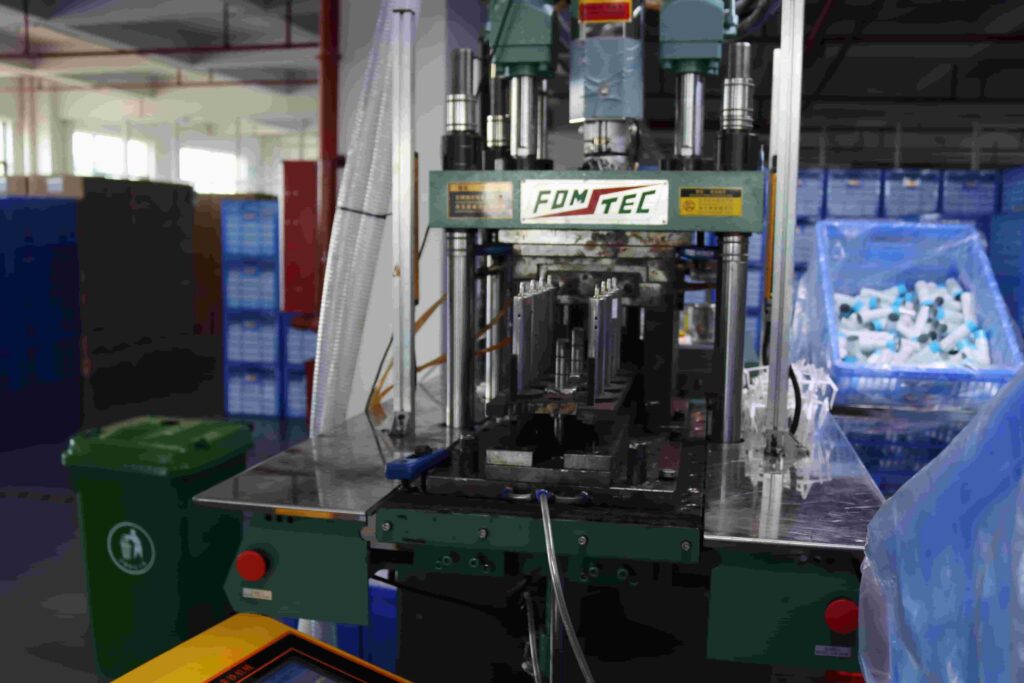
Why the Head Matters More Than Buyers Think
Neck finish compatibility is the most under-specified item in tube RFQs. The head is where leaks happen: it carries the thread or snap interface to the cap, the orifice your product dispenses through, and the shoulder that bonds to the extruded body. A body can be perfect and the tube still fails here.
The Process Flow
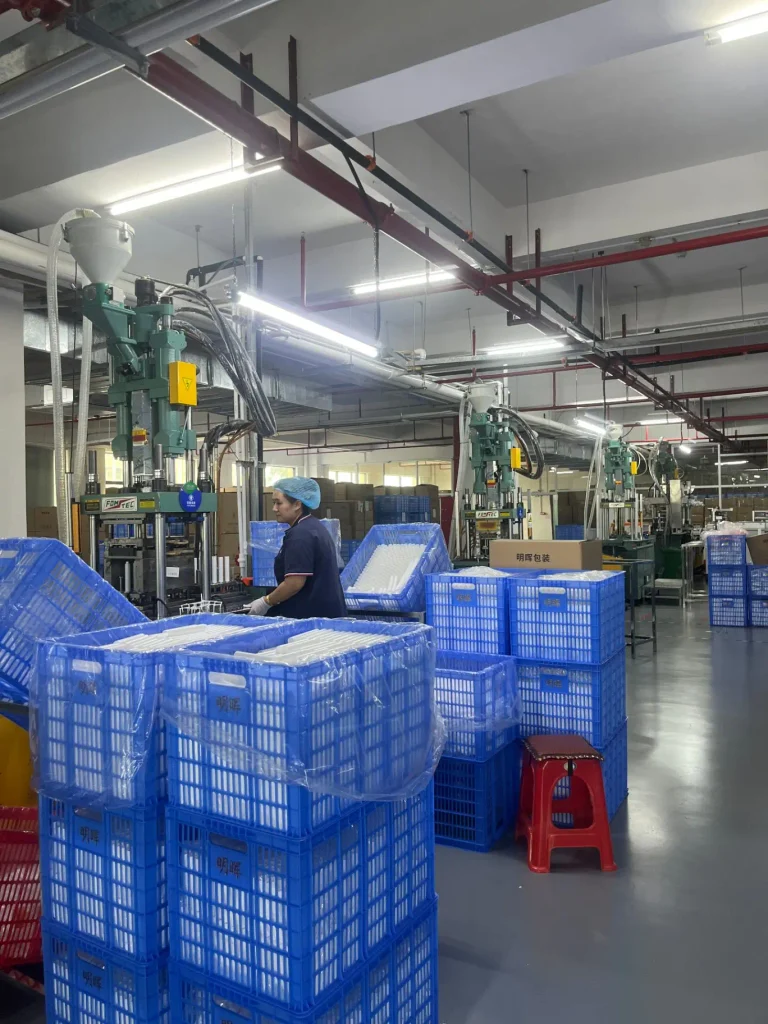
Feeding (HDPE + masterbatch) → melting (temperature + pressure control) → mold forming & cooling → finished head/shoulder.
Typical Injection Parameters
| Parameter | Typical window |
| Melt temperature | 245 ± 5°C |
| Injection pressure | 6 ± 0.5 MPa |
| Cooling water temperature | 8 ± 2°C |
| Cooling time | 8–10 s |
| Cycle time | 18–25 s per shot |
Heads are injection-molded in HDPE (with LLDPE as auxiliary and color masterbatch) — the same polymer family as the body, which matters for recyclability and for the bonding step.
Neck Finishes and Orifice Options
The available neck finishes are defined by the factory’s mold inventory — established tube factories maintain a mold list covering standard screw finishes, snap-on finishes, and a range of orifice diameters for every dispensing style (lotion pump, flip cap, spatula, nozzle tip). Before finalizing artwork, confirm the finish with your cap supplier; a cap mismatch discovered after tooling is expensive.
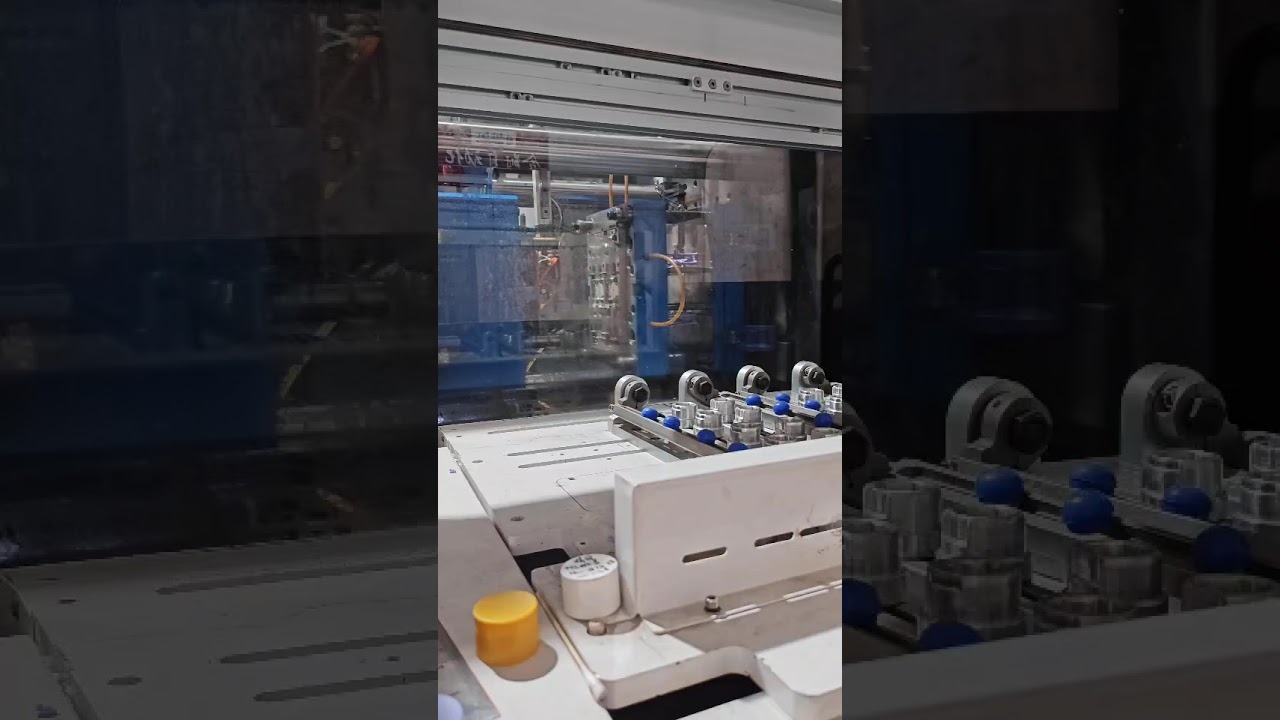
The 5 Critical Control Points in Head Injection
| Control point | Failure mode if uncontrolled |
| Joint/bond strength (head-to-body) | Head separates in filling or transit |
| Seal integrity | Product leaks at the shoulder seam |
| Thread crest thickness | Cap fails to tighten; strip or cross-thread |
| Shoulder thickness | Crack under torque or drop test |
| Thread-root wall uniformity | Uneven sealing surface; micro-leaks |
All five run under tightened inspection. Non-critical points — neck finish dimensions, compatibility, orifice and thread diameters, color, appearance — still run under normal inspection, just at relaxed stringency.
Fit and Functional Testing: How a Factory Proves the Head Works
- Fit testing requires two preconditions: a good torque tester and normal (correct) torque values.
- Form testing is done after oven conditioning — heads are tested as they behave after exposure to filling-line heat, not straight off the machine.
- First-article inspection is mandatory for any new operator, new machine, new mold, new material, or new process — and during first article and in-process checks, inspection runs tightened; at final shipment it runs normal or relaxed.
- Measurement discipline: select the gauge for required precision → verify the gauge (calibration label, zero check) → measure with controlled force at defined points → record and judge.
Non-critical control points are not “untested” — they are simply inspected at normal stringency rather than tightened. That distinction is a good interview question for any supplier.
FAQ
Can you match my existing cap?
Send the cap’s neck finish spec (or a sample) before tooling. A factory’s mold list defines which finishes run without new tooling; new molds mean longer lead time and higher MOQ.
What causes a tube to leak at the shoulder?
Usually one of the critical five: weak head-to-body bond, seal integrity failure, or thread-root wall non-uniformity. Ask which of the five the supplier treats as critical control points and how each is tested.
Why does the head test “after oven”?
Filling lines expose tubes to heat (hot fill, shrink tunnels, transport). Testing after oven conditioning catches failures that cold testing misses.
Next in the Series
Tube assembled — time to decorate → Cosmetic Tube Printing: Offset vs Silkscreen vs Hot Stamping. Series overview → Cosmetic Tube Manufacturing Process.

Work With a Factory That Can Show You the Process
Xinde Packaging (XDPACK) is a cosmetic plastic packaging source factory with 20+ years of experience and monthly capacity of 3 million+ tubes. ISO 9001:2015 certified (cert. no. 05126Q02540R053). Verified test reports, published for your independent verification: SGS FDA report TSNPC26001739001 · SGS PFAS 671-substance Not Detected report CANPC26010411601 · SGS REACH + PPWR (EU) 2025/40 report CANPC26014689301. If you’re looking for new tube packaging, feel free to contact us for more tube information.
→ Free standard samples (10,000 pcs MOQ), shipped worldwide (EU + US). All channels in one place: https://linktr.ee/xdpack?subscribe · Email info@xdpackcom.net · WhatsApp +852 4428 9016.