
Why PFAS Compliance Has Become a Packaging Priority for Cosmetic Brands
EU Cosmetic Brands Need More Than Product Compliance to Enter the Market
For cosmetic brands selling in Europe, PFAS compliance is becoming an essential part of packaging development. As regulatory requirements continue to evolve, brands need to consider not only the safety of their formulas but also the compliance of every cosmetic packaging component that enters the EU market.
Many brands initially focus on the main packaging material, such as the bottle resin or jar material. However, cosmetic packaging is a complete system made up of multiple components, and any single part can create compliance risks if it is not properly evaluated.
A cosmetic packaging supplier today needs to provide more than attractive designs and manufacturing capabilities. Brands increasingly need partners who can support material transparency, component traceability, third-party testing, and long-term production control.
A Real Packaging Project Revealed Hidden PFAS Risks Beyond the Bottle
One common misunderstanding among cosmetic brands is that testing the main packaging material is enough to confirm PFAS compliance.
In one premium skincare airless pump bottle project, the brand had already selected its bottle resin and completed basic PFAS testing. Based on the bottle test results, they believed the complete packaging solution was compliant.
During our review, we identified that the potential risk was not in the bottle body but in the outsourced pump system. More specifically, the rubber sealing ring inside the pump required additional verification.
The pump supplier could only provide a simple PFAS-free statement without complete third-party testing data. Since small functional components may involve additives or processing aids during manufacturing, the sealing component became a hidden compliance concern.
To solve this issue, we helped the brand replace the pump and sealing components with suppliers that had verified compliance records. After restructuring the components, we completed new samples, confirmed the packaging performance, and conducted additional validation before mass production.
The project was successfully completed, but it also highlighted an important lesson: PFAS compliance should be evaluated across the entire packaging structure, not only the main container material.

Understanding the EU PFAS Regulatory Landscape for Cosmetic Packaging
What Are PFAS and Why Are They Restricted?
PFAS, short for per- and polyfluoroalkyl substances, are a group of synthetic chemicals widely used because of their resistance to water, oil, stains, and high temperatures.
These properties have made PFAS useful in many industrial applications, including surface treatments and protective coatings. However, many PFAS substances are highly persistent in the environment, which has increased regulatory attention worldwide.
For cosmetic brands, understanding PFAS is not only about knowing the chemical definition. The more important question is how PFAS-related requirements affect packaging materials, suppliers, and product development decisions.
The EU PFAS Ban Is a Gradual Regulatory Process
When companies discuss the “EU PFAS ban”, it is important to understand that the regulatory landscape is developing through different restrictions and updates rather than one single regulation covering every PFAS substance and application.
The EU has introduced PFAS-related restrictions through the REACH framework, including restrictions on specific substances and uses. As regulatory discussions continue, brands selling products in Europe need to monitor updates and work with suppliers that can adapt to changing requirements.
For cosmetic companies, this means packaging compliance cannot be treated as a one-time document check. It requires ongoing supplier management and verification throughout the product lifecycle.
Where PFAS Risks Hide in Cosmetic Packaging
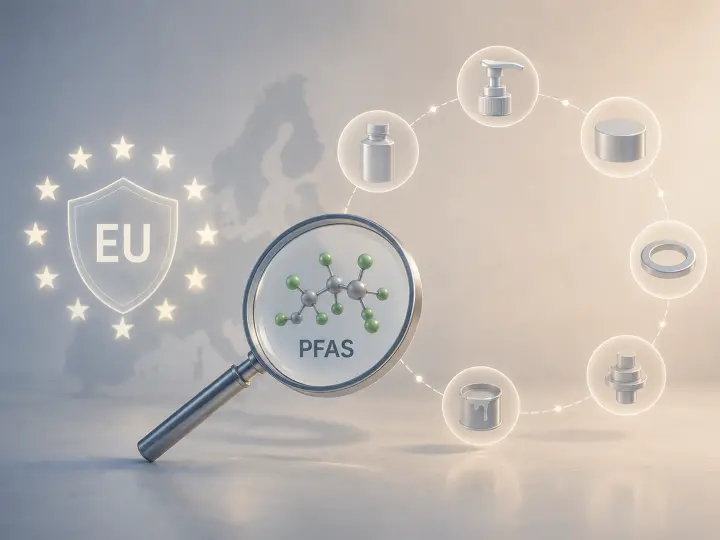
Cosmetic packaging is usually composed of multiple materials and components. The main container is only one part of the final packaging. A complete packaging system may include the bottle body, pump system, cap, gasket, valve, coating, printing ink, adhesive, and other external components.
Each component may involve different suppliers and production processes. Without full visibility of the packaging structure, brands may overlook potential compliance gaps. This is why a reliable PFAS-compliant packaging supplier should evaluate the entire system instead of focusing only on one material.
Why Early PFAS Planning Prevents Costly Packaging Redesign
The Common Mistake: Adding Compliance Requirements Too Late
One of the most common challenges we see is that brands consider PFAS compliance only after most packaging decisions have already been finalized.
A typical situation looks like this: The packaging structure has been designed, components have been selected, and sampling is almost complete. Then the brand realizes that the packaging needs to meet specific EU PFAS requirements.
At this stage, changes can become complicated. The brand may need to replace components, qualify new suppliers, adjust packaging structures, or repeat testing. In some cases, the selected materials or processes may no longer be suitable for the target market. These late-stage changes can increase development costs and delay product launches.
Early Supplier Involvement Creates a Smoother Development Process
The best approach is to include compliance requirements at the beginning of packaging development. When brands communicate their target markets and regulatory expectations early, suppliers can help evaluate suitable materials, lower-risk components, appropriate manufacturing processes, and required testing plans.
In our experience, projects that define PFAS requirements from the first development stage usually move more smoothly through sampling and production. By identifying risks early, brands can avoid unnecessary redesign and focus on bringing products to market faster.

Small Components Can Create Major Compliance Risks
Pump Systems and Sealing Components
Pump systems are one of the areas that require careful evaluation because they contain multiple functional parts. Components such as rubber seals, gaskets, and internal valves are often critical for product performance, but they can also introduce compliance risks if material information is incomplete.
These parts are frequently sourced from specialized suppliers, which means brands need confirmation that external components meet the same compliance requirements as the main packaging body. A supplier that only tests the bottle material may not have a complete understanding of the final packaging risk.
Surface Finishing and Decoration
Packaging appearance is another area that requires attention during compliance reviews. Processes such as UV coating, metallization, printing, and adhesive application can introduce additional materials into the packaging structure.
For premium cosmetic packaging, decorative effects are often important for brand positioning. However, these processes should be evaluated together with compliance requirements during the early development stage.
Outsourced Components Require the Same Compliance Standards
Many packaging manufacturers rely on external partners for pumps, closures, and other accessories. This creates an important question: Can the supplier verify every component involved in the final packaging?
A complete compliance approach requires transparency across the entire supply chain, including outsourced parts that may not be manufactured directly by the packaging company.

How Cosmetic Brands Should Evaluate a PFAS-Compliant Packaging Supplier
Avoid Relying Only on “PFAS-Free” Supplier Claims
A simple PFAS-free statement can be a useful starting point, but it should not be considered complete proof of compliance. Brands should look for suppliers that can provide supporting evidence, including testing records, material documentation, and verification processes.
The difference between a basic claim and a reliable compliance system is traceability. A strong supplier should be able to explain what was tested, which components were included, and how compliance is maintained after production begins.
Verify PFAS Compliance Through Third-Party Testing
Third-party testing is one of the most important ways for cosmetic brands to verify whether packaging suppliers can support EU compliance requirements.
A supplier’s internal statement can provide basic information, but independent laboratory testing provides stronger evidence. Brands should pay attention to the testing scope, methodology, and whether the analysis covers a broad range of PFAS substances.
Testing that only focuses on well-known substances such as PFOA or PFOS may not provide a complete picture, because PFAS refers to a much larger group of chemicals. Specifically, a reliable PFAS-compliant packaging supplier should be able to deliver verification across four core dimensions:
| Compliance Verification Dimension | What a Qualified Supplier Provides |
| Independent third-party test reports | Accredited laboratory reports (such as SGS) rather than unsubstantiated internal self-declarations |
| Clear testing methods and standards | Defined test methodology, reference standards and detection limits, with full transparency on testing scope |
| Full component-level documentation | Compliance documentation covering all wetted parts, including pumps, gaskets, seals and bottle bodies |
| Ongoing updated verification | Re-testing and refreshed documentation whenever raw materials, components or production processes change |
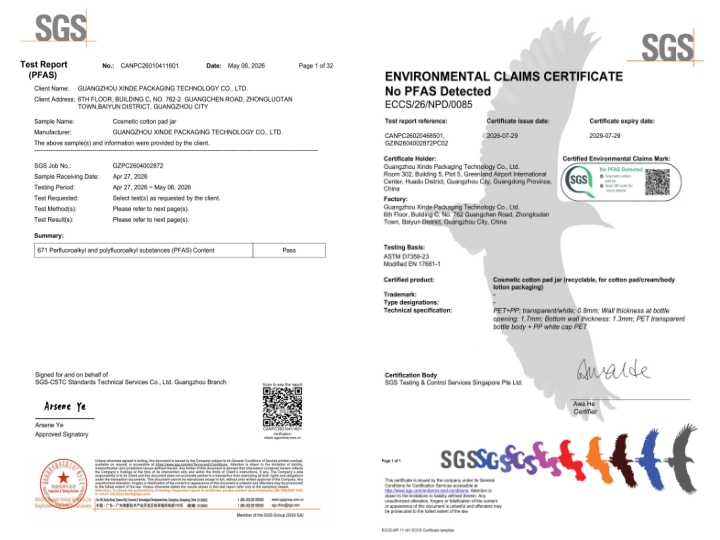
At XINDE Packaging, we use SGS PFAS testing based on Modified EN 17681-1:2025, covering 671 PFAS substances with results reported as Not Detected. For brands developing products for the European market, this type of verification helps create stronger confidence throughout the packaging development process.
Choose Suppliers That Manage Compliance Throughout Production
PFAS compliance does not end after a sample is approved. A packaging sample may pass testing, but production conditions can change due to material updates, supplier adjustments, or manufacturing changes. Without proper control, these changes may create new compliance risks.
An experienced supplier should have a process to monitor:
- Material changes
- Supplier changes
- Manufacturing process changes
- Updated compliance documentation
During one project, a supplier planned to update raw materials before mass production. Instead of accepting the change without further review, we requested updated compliance documents and confirmation before production started.
This approach helped ensure that the final production batch maintained the same compliance level as the approved sample. For cosmetic brands, this is an important difference between a supplier that only provides packaging and a supplier that actively manages compliance risks.
How XINDE Packaging Supports EU Cosmetic Brands With PFAS-Compliant Packaging
Compliance Built Into Packaging Development
At XINDE Packaging, we believe compliance should be integrated into packaging development rather than added as a final documentation step. Our process begins by understanding the brand’s target market, packaging requirements, and compliance expectations.
During project development, we review the complete packaging structure to identify all materials and components involved. For external components, we work with suppliers that can provide appropriate compliance documentation and verification records. During production, we continue monitoring material and supplier changes to reduce potential compliance risks.
PFAS-Compliant Packaging Solutions for EU Cosmetic Brands
XINDE Packaging provides cosmetic packaging solutions designed for brands that require stronger compliance control and supply chain transparency. Our packaging options include: airless pump bottles, PET/PE/PETG bottles, PP jars, PE/ABL/pure aluminum tubes.
For brands looking for more sustainable solutions, we also support packaging options using PCR materials, sugarcane-based materials, and wheat straw-based packaging solutions. By combining compliance management with flexible packaging development capabilities, we help cosmetic brands create packaging solutions suitable for evolving EU market requirements.

Final Thoughts: The Right Packaging Supplier Reduces EU PFAS Compliance Risks
The EU PFAS ban and evolving chemical regulations are changing how cosmetic brands approach packaging development. PFAS compliance is no longer only about testing a bottle material. The real challenge is managing the complete packaging system, including small components, outsourced parts, and production changes.
Brands that want to reduce compliance risks should work with suppliers that provide:
- Full packaging traceability
- Reliable third-party testing
- Early development support
- Continuous production control
Choosing the right packaging supplier can help brands avoid unexpected redesign, reduce project risks, and build a stronger foundation for entering the European market.
Frequently Asked Questions
How can beauty brands verify if a packaging supplier’s PFAS-free claim is trustworthy?
A simple “PFAS-free” statement alone is not sufficient proof of compliance. Reliable verification depends on full supply-chain traceability across four core dimensions: independent third-party test reports from accredited labs, clear testing methods and reference standards, component-level compliance documentation covering all wetted parts, and updated verification whenever materials or production processes change.
When is the best time to integrate PFAS compliance into cosmetic packaging development?
PFAS requirements should be defined at the very beginning of packaging development, not added as a final check after design is finalized. Late-stage compliance adjustments often force brands to replace components, qualify new suppliers, repeat testing, or even redesign the packaging structure, which raises development costs and delays product launches. Early supplier involvement allows for proper material evaluation and risk mitigation from the sampling stage.
Request PFAS Compliance Support for Your Cosmetic Packaging Project
XINDE Packaging helps cosmetic brands develop EU-focused packaging solutions with compliance considerations built into the development process. With complete traceability, verified component suppliers, PFAS testing support, and experience supporting international cosmetic projects, we help brands evaluate packaging risks before they become production problems.
If you are developing new cosmetic packaging for the European market or reviewing your current supplier’s compliance capability, contact XINDE Packaging to discuss your project requirements and request PFAS-related documentation.