
What Cosmetic Brands Should Know About Spray Coating
Cosmetic bottle spray coating is a surface-finishing process used to create specific colors, opacity levels, gloss effects, textures, and specialty appearances. For brands, the challenge is not simply achieving a desired look once, but reproducing that finish consistently across mass production.
A reliable coating result depends on more than the paint itself. Surface preparation, bottle temperature, application conditions, film thickness, drying, and curing can all affect the final appearance and adhesion of the coating.
This article explains how to choose a suitable spray coating finish, recognize common coating defects, and establish practical quality checks before mass production. The guidance focuses on cosmetic packaging buyers rather than coating engineers.
In our previous article, we examined how blow molding affects the structure and consistency of the finished cosmetic bottle. Once that bottle is ready for surface finishing, spray coating becomes the next important quality stage.
This article is the third part of our cosmetic bottle production series, covering the process after preform injection molding and blow molding. The goal is to help brands evaluate both the visual result and production reliability of coated bottles.
Choosing the Right Spray Coating Finish for Your Cosmetic Bottle
The right finish depends on the visual identity, bottle material, and performance requirements of the product. A matte finish creates a very different impression from a glossy surface, while translucent and gradient coatings depend heavily on the underlying bottle and coating thickness.
| Finish | Visual Effect | Typical Application | Key Buyer Consideration |
| Solid / Opaque | Full, even color coverage | Skincare and body care | Coverage consistency |
| Translucent | Color with light transmission | Serums and essence bottles | Base material and film thickness |
| Matte | Soft, low-gloss appearance | Premium skincare | Gloss consistency and durability |
| Glossy | Smooth, reflective appearance | Minimalist and luxury packaging | Surface defects become more visible |
| Gradient | Gradual color transition | Premium or artistic designs | Color transition consistency |
Specialty finishes can create a stronger visual identity but usually require tighter process control. Pearlescent effects depend on how light interacts with the coating, while soft-touch finishes combine a matte appearance with a distinctive tactile feel.
For transparent PET bottles, the final effect can also change with the base color, coating coverage, and film thickness. This is particularly important when a brand wants a translucent color or gradient, because relatively small application differences may become visible through transmitted light.
A digital artwork can show the intended appearance, but it cannot fully reproduce how a coating will look on the actual bottle. For this reason, brands should approve a physical production-intent sample under agreed lighting conditions rather than relying only on artwork or color references.
How Spray Coating Quality Is Built Before Inspection
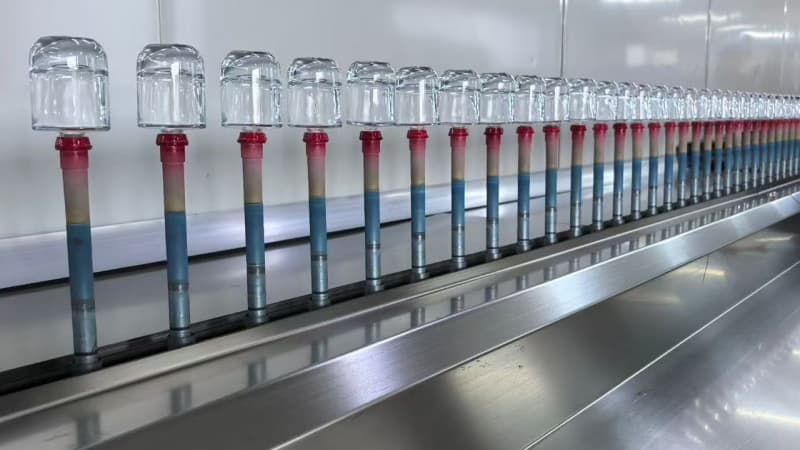
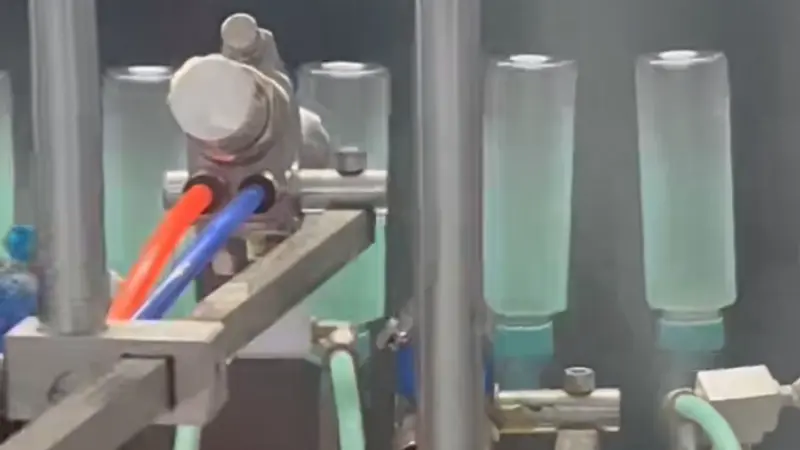
Spray coating quality starts before the spray gun begins moving. The bottle surface needs to be clean and suitable for the coating system, because oil, dust, silicone contamination, or other surface conditions can interfere with coating appearance and adhesion.
Depending on the substrate and coating system, surface preparation may include cleaning or extra surface activation. Corona, plasma, or flame treatment can boost wettability and adhesion on suitable surfaces before coating or printing. However, this treatment is material- and application-specific, and not required for all bottles.
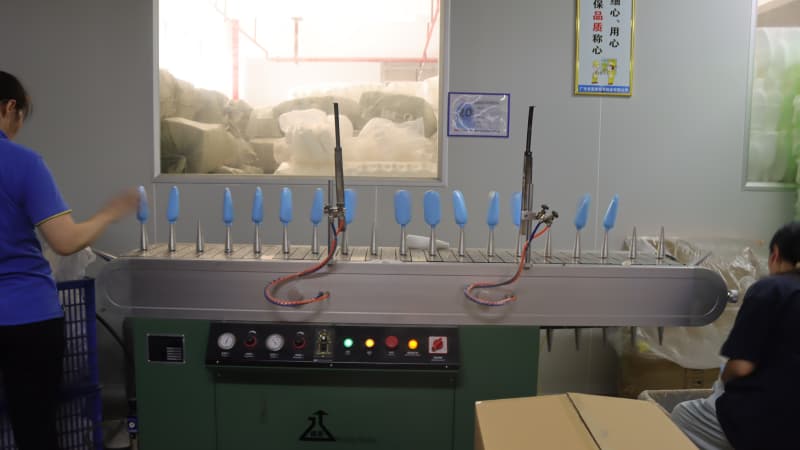
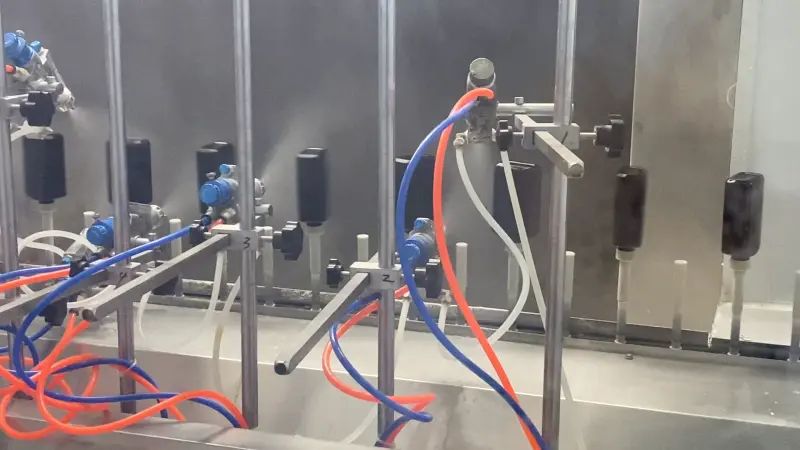
During application, the coating must reach the required areas with appropriate coverage and film build. A smooth appearance does not automatically mean that the coating is evenly distributed, particularly around shoulders, grooves, corners, and recessed sections.
The curing stage is equally important. A coating may feel dry when touched while still containing residual solvent or remaining insufficiently cured internally, which can affect later handling and decoration.
Technical coating guidance also links defects such as pinholing, contamination, poor adhesion, and uneven film build with factors including surface preparation, application conditions, film thickness, and drying conditions.
For cosmetic packaging, this means the coating process should be evaluated as a complete sequence rather than as a simple color-application step. The final target is a finish that is visually consistent, adequately cured, sufficiently durable, and ready for whatever decoration comes next.
Common Spray Coating Defects: What Brands Should Check
Color, Coverage, and Film Thickness Consistency
Color approval should go beyond asking whether the bottle looks like the reference sample. Brands also need to examine whether the color and coverage remain consistent across different areas of the bottle, especially around the shoulder, bottom, grooves, and corners.
A recent project at XINDE illustrates why this matters. A mid-market body-care brand ordered 250 ml PET round bottles with a matte gray finish. The approved sample matched the customer’s target in color, gloss, and coverage, so it passed without concern.
During mass production, however, inspectors found noticeable variation after about one-third of the batch had been coated. Some bottle sides appeared darker, shoulder areas looked lighter, and occasional pieces showed slight exposure of the underlying material.
We first checked the coating batch and confirmed that the same prepared paint was being used. We then reviewed spray-gun distance and movement speed, but those parameters had remained unchanged.
The investigation eventually moved to the curing oven. Two heating tubes in the middle zone had deteriorated, causing the actual temperature to run nearly 8°C below the setting.
This reduced heating also affected coating flow and leveling. Newly loaded bottles entered the spray area at room temperature, while bottles already on the line had become warmer from residual process heat, making the beginning of each loading cycle more unstable.
We replaced the aging heating tubes, recalibrated each temperature zone, and added a preheating station before the spray booth. We also slightly increased atomization pressure and spray-fan overlap to improve coverage consistency.
After adjustment, the production batch achieved the customer’s required ΔE below 1.5, while film thickness became much more uniform. The customer then introduced hourly color and film-thickness sampling into their repeat orders.
The lesson is important for buyers: sample approval is not mass-production validation. A supplier needs to demonstrate that the approved appearance can be reproduced consistently under actual production conditions.
Coating Adhesion: A Finish Can Look Perfect and Still Fail
Coating adhesion is one of those properties that customers may not notice during a visual inspection. A bottle can have excellent color, gloss, and surface smoothness while still carrying a coating layer that does not adequately withstand later handling or decoration.
At XINDE, we use a cross-cut test followed by 3M 810 tape application twice to evaluate coating adhesion. Our internal acceptance criterion allows peeling of no more than 0.5 mm² at up to three spots, provided that the peeling does not affect text readability.
This criterion is XINDE’s internal standard, not a universal industry requirement. Different coating systems, substrates, products, and brand specifications may require different acceptance limits.
The cross-cut method itself is standardized in ISO 2409:2020, which describes cutting a right-angle lattice through the coating to assess resistance to separation from the substrate or previous coating layer. ISO also notes that this empirical test is not itself a direct measurement of adhesion strength.
For a buyer, the practical point is straightforward: do not evaluate adhesion only because the coating feels dry or looks smooth. Agree on the test method and acceptance criteria before mass production, particularly when the bottle will receive additional printing, hot stamping, or other decoration.
Hidden Defects: Corner Coverage and False Curing
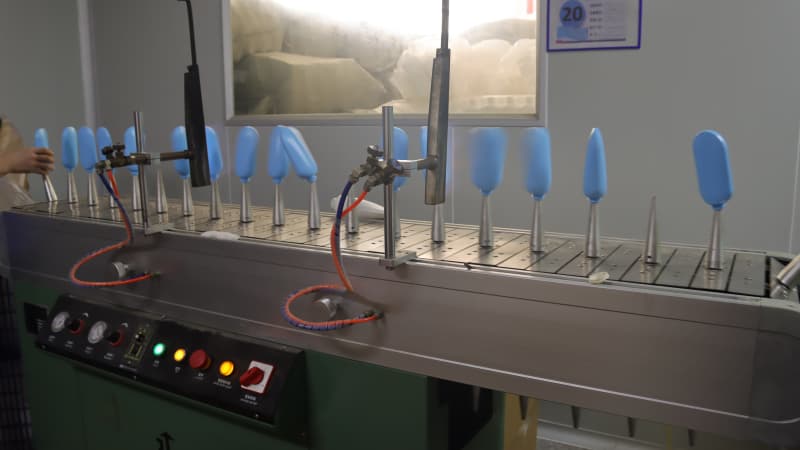
Some of the most easily missed coating problems occur in areas that buyers rarely inspect closely. A bottle may look uniform when viewed directly, while insufficient coverage around the shoulder, bottom recess, or thread area remains hidden.
At XINDE, we use angled strong lighting to inspect these areas rather than relying only on normal office lighting. We also measure film thickness at multiple bottle zones, with the main body, shoulder, and bottom each receiving dedicated measurement points.
This approach matters because the spray pattern does not reach every part of a three-dimensional bottle with equal efficiency. Corners and recessed areas can receive less coating, creating a thinner film that may become visible only when the bottle is viewed against strong directional light.
False curing creates a different type of hidden risk. The surface can feel completely dry and non-sticky while the coating underneath remains insufficiently cured, particularly when solvent has not fully escaped from the film.
For packaging that will later contact filling equipment, alcohol, disinfectants, or decoration processes, this hidden condition can become a much larger problem. Dry to the touch does not always mean fully cured, so additional process or performance checks may be necessary.
Curing and Compatibility With Downstream Decoration
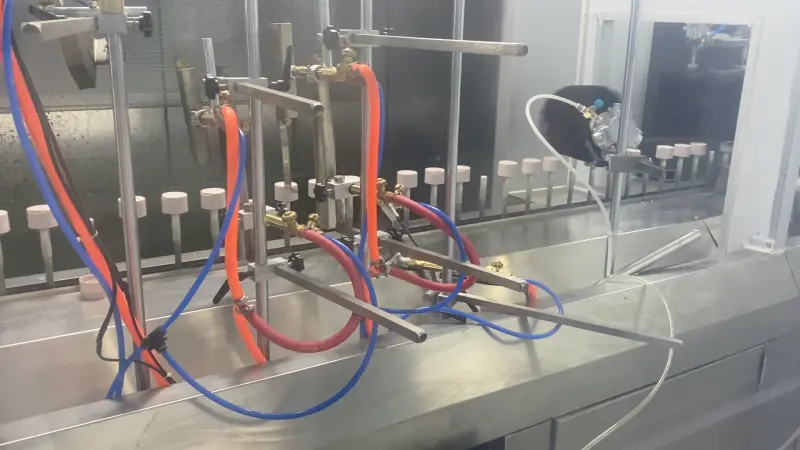
Spray coating is rarely the final decorative stage of a cosmetic bottle. The coated surface may later receive silk printing, hot stamping, labels, or other components, so the coating must work as a foundation for the next process.
A 100 ml PET serum bottle project showed us exactly why. The customer wanted a high-gloss mirror-black finish, and the sprayed bottles looked excellent during inspection. The surface was smooth and glossy, with no obvious particles or runs.
The problem appeared during hot stamping. Foil edges lifted, some areas could be removed with a fingernail, and parts of the metallic surface became hazy. We initially suspected the hot-stamping temperature and pressure, but changing those settings did not solve the problem.
Further investigation showed that the spray coating was not fully cured. Some residual solvent remained inside the coating, causing slight softening under hot-stamping pressure. The highly polished finish also had a relatively thin film and a surface layer associated with the leveling additive, which reduced foil adhesion.
We slowed the curing-oven conveyor, extended post-curing time, and added light corona treatment before hot stamping. After the adjustment, the hot stamping became stable, and the decorated surface remained intact during a 3M tape pull test.
Since then, our internal practice has been straightforward: spray-coated bottles that will later receive silk printing or hot stamping should undergo adhesion- and curing-related checks before moving downstream.

From Approved Sample to Mass Production: What Should Brands Confirm?
A successful spray-coating project needs more than one attractive sample. Brands should define the target appearance, the inspection conditions, and the performance criteria before production begins.
The most useful approval framework combines visual inspection with process and performance verification. A physical master sample provides the reference, while objective measurements help determine whether mass production remains within the agreed range.
| Approval Stage | What to Lock | Evidence to Keep |
| Finish selection | Color, gloss, opacity, and texture | Approved physical reference |
| Sample approval | Appearance under agreed conditions | Signed sample / reference |
| Process validation | Film thickness, adhesion, and curing | Test records |
| Trial production | Multiple bottles under production conditions | Trial-batch inspection |
| Mass production | Batch consistency and defect control | QC records and sampling results |
Before releasing a coated bottle to mass production, brands can ask suppliers to confirm three practical points:
- whether the approved finish can be reproduced under normal production conditions;
- whether critical areas such as shoulders, grooves, and bottle bottoms receive adequate coverage;
- whether the coating is compatible with the next decoration, filling, handling, and transportation stages.
Testing requirements depend on the coating system, bottle material, finish, and intended use. Axalta, for example, evaluates plastic coatings by appearance, adhesion, scratch resistance, flexibility, and curing, showing that coating performance must be assessed alongside the substrate and application.
For projects with special market or material needs, third-party testing adds validation beyond routine production checks. Selected XINDE products pass SGS tests for US FDA 21 CFR requirements and have PFAS screening with no PFAS detected. These documents are product-specific and must match your packaging and project.
This also explains why a single reference bottle is not enough. The goal of approval is not only to confirm that one bottle looks right, but to establish a reproducible target that can be maintained throughout production.
Why XINDE’s Spray Coating Is Ready for Downstream Decoration
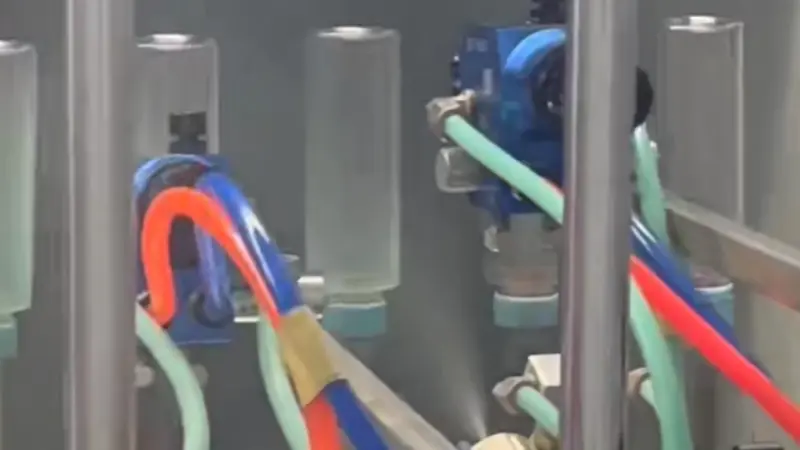
At XINDE, spray-coating inspection begins with the bottle condition before spraying. We check the surface, confirm the required finish, and pay attention to bottle temperature consistency when the coating system requires it.
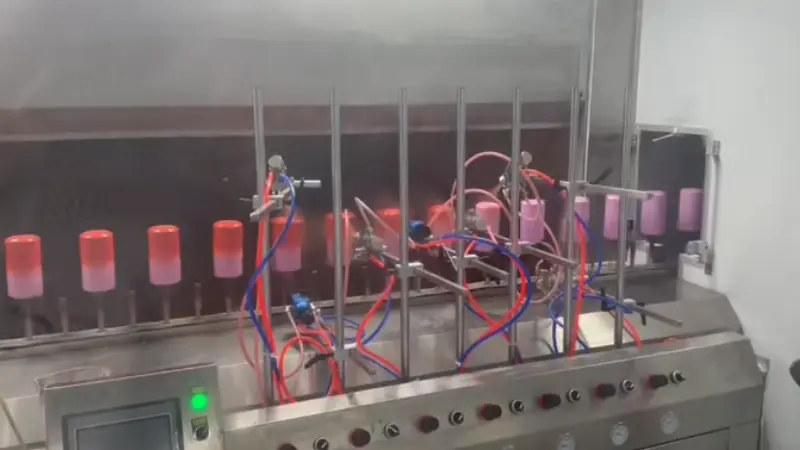
During production, we monitor application consistency and film coverage rather than judging color only after the bottle has left the line. Critical areas receive additional attention because three-dimensional bottle geometry can make uniform coating more difficult.
After coating, we combine appearance inspection with film-thickness measurement and adhesion testing when required. For products moving into hot stamping or silk printing, we also consider curing and downstream compatibility rather than treating spray coating as an isolated process.
For projects requiring additional documentation, we can provide applicable third-party testing records for selected products and materials. The relevant report or certificate is matched to the specific tested product rather than being presented as a blanket certification for the entire product range.
Our acceptance criteria are based on the actual project requirements. We do not assume that one universal specification can cover every cosmetic bottle, because different substrates, coating systems, finishes, and downstream processes can require different controls.
Frequently Asked Questions
Why can the same paint batch produce different colors on the same batch of bottles?
The coating formula may remain unchanged while film thickness, bottle temperature, application conditions, and curing vary during production. These process differences can change color, coverage, or gloss, which is why process consistency matters as much as the paint itself.
Can a spray-coated bottle look perfect and still fail hot stamping?
Yes. A coating can look smooth and glossy while still being insufficiently cured or unsuitable for the next decoration process. Heat, pressure, and contact with hot-stamping foil can expose weaknesses that were invisible during ordinary appearance inspection.
Is a coating that feels dry necessarily fully cured?
No. A dry surface does not always mean that the coating has fully cured internally. Depending on the coating system, additional curing verification, rubbing tests, adhesion tests, or downstream-decoration validation may be appropriate before mass production.
Conclusion: A Good Spray Finish Must Be Consistent, Durable and Process-Ready
Spray coating does more than add color to a cosmetic bottle. It determines the bottle’s visual character while also affecting surface consistency, adhesion, durability, and compatibility with the decoration processes that follow.
The most important principle for brands is simple: do not approve coating based on appearance alone. A successful finish needs to remain consistent across production, cover difficult bottle areas, achieve the required curing and adhesion, and perform reliably in the next stage.
Continue the Cosmetic Bottle Manufacturing Series
In our previous article, Cosmetic Bottle Blow Molding: What Brands Should Check Before Mass Production, we examined how blow molding affects bottle geometry, wall-thickness distribution, neck alignment, and other characteristics before surface finishing begins.
Now that the coating stage has been validated, the next production challenge is achieving a consistent metallic finish. Read Cosmetic Bottle Electroplating: Common Defects and Quality Checks to understand what brands should verify before approving an electroplated cosmetic bottle.
At XINDE, we help cosmetic brands evaluate bottle finishes, coating requirements, and downstream decoration needs before mass production. Share your bottle material, target finish, and downstream decoration requirements with our packaging team so we can discuss the relevant coating and testing considerations for your project.